

Inside Tantrums: How a First-Time Founder Built One of Trail Running's Coolest Brands
Momentum over certainty, iteration over expansion, an authentic point of view, and why production is the real hurdle to success.

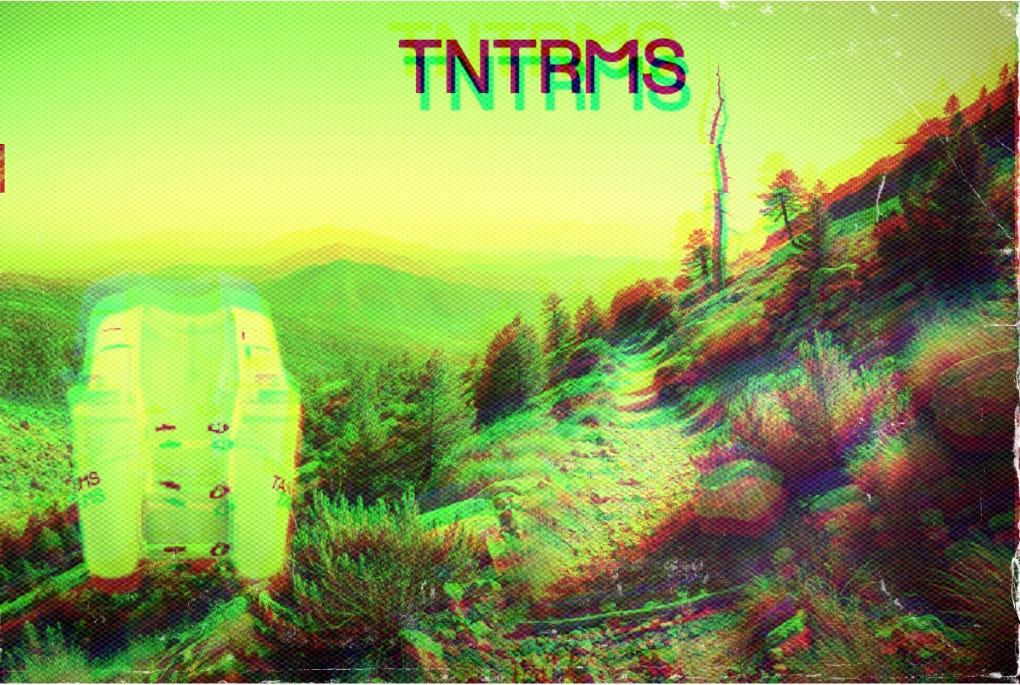
Up until late 2025, I assumed the hydration vest market in trail running was more or less solved.
In a sport that’s become increasingly saturated, hydration vests felt optimized to the point of diminishing returns. Newer brands like Raide Research pushed runners toward waist belts and alternative carry systems, while incumbents like Salomon and Nathan continued to compete on capacity, features, and price tiers.
In this reality, hydration vests technically worked, but they didn’t disappear. You still felt the weight of them on your body. And in trail running, that friction compounds. A vest that bounces, shifts, or distracts becomes harder to ignore the longer you’re out there. For runners chasing true performance, there was an implicit trade-off between minimalism and function.
Then Tantrums came along.
The Pasadena, California-based brand entered the market with a single signature product: a simple, low-bounce, performance-first hydration vest. In short order, it became one of the coolest brands in trail running. Not by adding more, but by doing less, better.
I don’t remember exactly when I first noticed Tantrums, but I distinctly recall seeing the Crest 6 pack all over Instagram over the last year. The brand’s real coming-out party, however, can be traced back to the 2024 Western States Endurance Run, where Anna Louden wore the pack en route to an 11th-place finish in her 100-mile debut.
As Tantrums founder Adam Copeland later described in an August 2025 interview with Second Nature, he DM’d Louden after she earned a golden ticket at the 2024 Canyons 100K to wish her luck at Western States. That message put Tantrums on her radar at the exact moment she was searching for a hydration vest for WSER.
At the time, Tantrums vests weren’t yet off the production line. But Adam was scheduled to visit the Vietnam-based factory that May (the same factory used by Adidas, Raide, The North Face, etc.) and managed to bring back a sample. He got it to Louden two weeks before Western States, and the rest is history.
Since then, the Crest 6 (and early Roam 11 prototypes) have crossed major race finish lines on the backs of Brett Hornig (Black Canyon 50K), Sarah Ostaszewski (Cocodona 250), Ryan Montgomery (Western States), Kyle Curtin (Hardrock), Cade Michael (OCC), David Sinclair (CCC), Lauren Puretz (UTMB), and Rachel Entrekin (Mammoth 200). That list will almost certainly keep growing in 2026.
Whenever a brand breaks through this quickly, especially in a category as mature as hydration, I pay attention. So I reached out to Adam to better understand how Tantrums came to be, how it operates, and why it feels fundamentally different from everything that came before it.
I left our conversation with a better understanding of Tantrums’ place in the trail running industry, why it stands out, and what makes it so unique.
The story starts not with branding, but with process.
Founder-Market Fit: Process, Production, and the First Step
Tantrums didn’t start as a brand idea. It started as a process problem.
On a run sometime in 2022, Adam realized there was room in the market for an aesthetic-driven brand that offered a truly performance-first hydration solution. At the time, he wasn’t actively trying to start an outdoor company. He was more than 17 years into a career in media production.
But after getting laid off during COVID and cycling through three jobs in as many years, Adam found himself searching for what came next. It was Q4, the slowest stretch in the advertising calendar, and the broader economy had begun to cool. For the first time, trying something solo didn’t feel like the right next step.
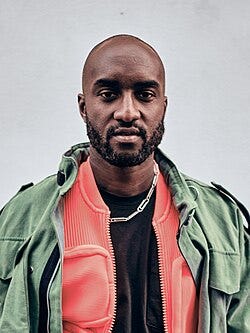
As he began thinking more seriously about Tantrums, Adam became drawn to the idea of the “creative orchestra”, the way each part of the creative process seemed to complement and depend on one another. He took inspiration from the late Virgil Abloh, an iconic fashion designer, entrepreneur, and artist most well-known for his Off White brand. Having known Abloh personally, Adam notes being “inspired by his ability to create” and recalls reading about his idea that “production was the biggest hurdle.”
During a speech to the Rhode Island School of Design, Abloh put it bluntly:
“Perfectionism doesn’t advance anything, ironically. As a creative and as a designer, there’s no wrong way to go about the future of your career. The only failure is not to try.”
He echoed the same sentiment during another talk at Columbia University:
A thing that I tell aspiring creators is that […] the only way to get to the end means is to start your domino effect. Which is basically: put out bad work.”
You just have to make something, take the first step, then iterate over time.
During Tantrums’ first year, Adam kept returning to the same thought: “I just have to make something.” The brand’s first physical product wasn’t a vest at all, but a hydration bottle ordered from Alibaba with “Tantrums” printed on it. It was cheap. It was imperfect. But it existed. The first domino had fallen.
From there, Adam sought advice from a friend on how to formally get started. The guidance was simple: make a deck. It needed to explain the founder story, the product, and how much capital would be required to bring it to market. Once finished, he sent it to friends and family and asked for investment.
Within 36 hours, he had raised a “sizable” amount of capital to get started.
The founding of Tantrums doesn’t follow the familiar outdoor playbook. It isn’t a designer chasing vibes or an athlete monetizing a platform. It’s the story of an operator with a deeply process-oriented background, learning in real time how to turn an idea into something tangible.
And once that first step was taken, momentum took over.
Momentum Without a Map: How Tantrums Actually Got Built
Tantrums didn’t begin with a perfectly sequenced plan. Adam raised money from friends and family before production was fully locked. Not because it was ideal, but because movement itself creates momentum. As he put it to me, the philosophy was simple: keep taking the next step, and the path would appear.
From the start, momentum came from two places:
Internal expectations: raising money from friends created immediate pressure to turn intention into action.
External commitments: telling people Tantrums existed, signing up for events like The Running Event (TRE), and publicly stepping into the arena meant there was no easy way to back out.
Adam describes it as “a rock rolling down a hill”: hard to get moving at first, but once it’s rolling, stopping becomes harder than continuing. In the first year, the goal wasn’t perfection, it was simply to make something.
That bias toward action carried into every operational decision that followed.
Production timelines slipped. Factories delayed. Details changed. But decisions still had to be made to keep the business moving forward. In theory, you weight the options and choose the best path. In practice, there often is no right answer. Some decisions weren’t really decisions at all. In these scenarios, retail timelines and delivery commitments can make them for you.
Adam described this phase as “going around corners”. When you’re approaching a corner for the first time, you can’t see what’s on the other side. The more corners you’ve turned, the better your intuition becomes. Occasionally, there are guides, people who can tell you what’s likely ahead, but many of Tantrums’ early decisions had no such map. Intuition had to stand in for certainty. Mistakes became feedback. Each wrong turn informed the next one.


And sometimes, the hardest debates weren’t the most important ones. Is this the right shade of green? Maybe. But obsessing over perfection can stall progress.
Product decisions compound. Momentum beats clarity. Every delay creates operational debt, while every shipped product creates learning. For Tantrums, much of the progress happened before Adam and his team knew, objectively, what they were doing.
This is the unglamorous middle of Tantrums. The part that doesn’t show up on Instagram, but the part that best helps explain why the brand feels different. Tantrums wasn’t built by optimizing spreadsheets or reverse-engineering incumbents. It was built by moving forward under uncertainty, making real products, and letting momentum reveal the path one corner at a time.
That process shows up clearly in the product itself.
Why Tantrums Feels Different
Throughout my conversation with Adam, I kept circling the same question: why does Tantrums feel different from other hydration brands? Why has it broken through in a category already crowded with capable incumbents?
The answer, I think, comes down to three reinforcing factors.
1. A Strong and Authentic Point of View
Adam has spent most of his career creating content that sells a “cool” lifestyle. He understands how to present a brand as contemporary, which he believes helps it stand out, noting: “Many brands don’t feel contemporary and therefore feel more nostalgic.”
But for Tantrums, aesthetic isn’t the strategy, it’s the byproduct. Adam emphasized the importance of being unique and authentic. “The product needs to have a very strong point of view.”
To that end, Tantrums is intentional about what it is and what it isn’t. The brand leans heavily into its performance-first identity. Nearly every picture on its Instagram feed is a race photo, many of them finish-line shots. The goal isn’t to romanticize trail running, but to show the effort and difficulty the sport demands.
That same filter applies to feedback. Adam primarily listens to pro athletes actually racing in the product, not because other input isn’t valuable, but because the performance remains the north star. The result is a clear product DNA: fast, lightweight, and low-bounce. Authenticity isn’t manufactured, it emerges naturally when those priorities remain intact.
2. Iteration, Not Expansion
Despite the buzz, Tantrums currently sells a single hydration vest: the Crest 6. But that simplicity hides a constant cycle of iteration.
Adam describes product development as a “collaboration” with his talented designer, Tyler, one rooted in trust and shared taste. “You can’t do it all yourself,” he told me. “And when you find the right collaborators, you can build something special.”
It’s also difficult to know how much you’ve improved on a product until runners put the product to use. Adam frames this as trying to “make 1+1 = 3”. Small, meaningful improvements that compound over time. Then, in the next iteration, find a way to make 3+1 = 5.
Together, the team assesses feedback and decides whether to refine the existing pack or explore a closely related product with more capacity and features (more on this later). The emphasis is always on preserving what people already love, while moving the product forward in incremental ways.
This approach reinforces the core product while avoiding unnecessary feature creep, a common trap in mature categories.
3. Premium Without Competing on Price
As a small brand without the economies of scale enjoyed by incumbents like Salomon or Nathan, Tantrums can’t compete solely on price. A Crest 6 retails for $179.99, which means it has to earn its premium positioning1.
That premium isn’t justified through branding alone. Low-bounce remains non-negotiable, and continuous improvements (better materials, a softer neckline, easier-to-use hooks) help maintain a performance-first standard that supports the price point.
Tantrums doesn’t try to be everything to everyone. It focuses on doing one thing exceptionally well, and pricing accordingly.
What Keeps Adam Up at Night
By most external measures, Tantrums is doing a lot right. The Crest 6 has sold out in its Oxford Tan colorway. The brand’s booth at TRE drew significant attention. Tantrums also recently announced several high-profile additions to Team Tantrums, including Rachel Entrekin, Anna Louden, Lauren Puretz, David Sinclair, and Tommy Sullivan.
Still, Adam doesn’t take any of it for granted. When he’s not focused on product development, two challenges dominate his thinking.
1. Awareness Beyond the Core
“Everyone watching trail race livestreams knows we exist. How do I get to the other 14 million trail runners that aren’t turning on the livestream to Western States?”
For Adam, the answer isn’t more digital noise. It’s meeting runners where they already are.
Offline → Run Clubs: Many trail runners aren’t social-media-first. They’re not spending hours on Instagram or sitting in front of a computer. If Tantrums wants to reach them, it has to show up in real life.
Setting a bar for showing up IRL: Adam is deliberate about events like TRE, preferring not to show up unless the brand can create something worth talking about. That mindset drove this year’s highly curated, bodega-themed booth, an experience so distinct that nearly every TRE trip report mentioned it. The underlying question remains the same: “How are more consumers going to know we exist?”


2. Distribution Without Dilution
Tantrums currently sells through two primary channels: its direct-to-consumer site and a growing wholesale network of specialty run shops.
Local run stores play a critical role. They introduce the product to more offline runners and provide unfiltered feedback on what customers are asking for, whether that’s a cheaper version of a vest or an entirely different product, like a hydration belt.
That feedback is valuable precisely because it comes straight from the market. But it also creates tension. As Tantrums grows, Adam will need to continue balancing retailer demand with the brand’s performance-first DNA, expanding distribution without compromising the point of view that made the product compelling in the first place.
Looking Ahead: Improvements + The Roam 11
Looking forward, Tantrums isn’t chasing reinvention, it’s doubling down on refinement.
The next iteration of the Crest 6 will include several incremental improvements, including a softer neckline, updated materials, and more pronounced connector hooks.


Beyond that, Tantrums plans to officially introduce the Roam 11, a larger-capacity hydration vest expected in Spring 2026. While it builds on the Crest 6 platform, the Roam 11 is designed for longer efforts and additional features:
Updated, more durable front-pocket materials
Larger, zipper front pocket to hold an iPhone
Raised bottle position for easier access
Load-bearing backbone chassis
Backside zipper pocket
11L of capacity
Same philosophy, broader use case.
Why Tantrums Matters
Tantrums is a case study in doing fewer things better.
As a young brand backed by friends-and-family capital, it doesn’t have the luxury of chasing every feature or launching a sprawling product line. Instead, it has chosen to focus on low-bounce performance, disciplined iteration, and on making real products under real constraints.
The brand is proof that focus beats features, momentum beats certainty, and production (not ideas) is the true hurdle to success. By consistently taking the next step, Adam Copeland shows that you don’t need everything figured out to start. You won’t know what’s around every corner, but the only way to learn is to keep moving forward.
And perhaps most importantly, Tantrums demonstrates how a strong point of view, and the discipline to protect it, allows a small brand to stand out in a crowded competitive landscape.
My sincere thanks to Adam for being so generous with his time. I’m deeply inspired by what he’s built with Tantrums in less than two years. If you are in the market for a hydration vest, they’re well worth a look (no affiliation, but I do own a Crest 6).
If you’ve already tried Tantrums, or have thoughts on the brand, I’d love to hear them in the comments.
The Aid Station
Miscellaneous quick hits. Trail style. Actionable, digestible, essential.
🎙️ The Freetrail Podcast x Trail Waves
In this week’s edition of “is this real life?”, I’m excited to share that I recently appeared on The Freetrail Podcast. DBo and I talked about what motivated me to start this newsletter, dug into a few specific Trail Waves pieces, and covered a wide range of trail running business topics that have been top of mind.
When I started this newsletter, I never imagined it would lead to conversations like this or put me in the same podcast feed as some of my sporting heroes. It’s been both motivating and humbling to contribute, in even a small way, to the broader trail running community.
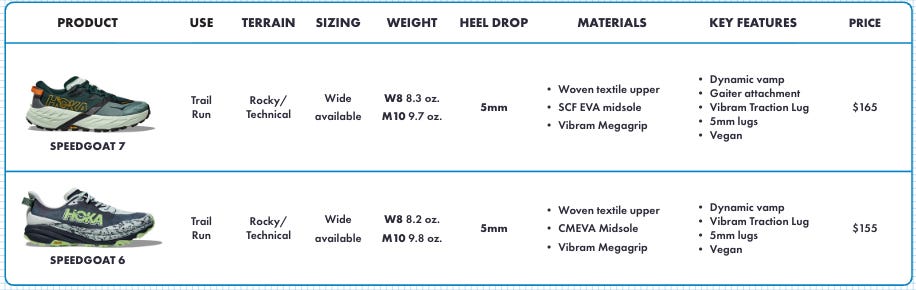
👟 HOKA Releases the Speedgoat 7
HOKA recently released the newest version of its popular Speedgoat trail shoe. The latest iteration brings upgraded traction and cushioning, as well as a refreshed midsole and Vibram Megagrip outsole.
💰 Raide Firsts Grant
Raide Research has announced its Raide Firsts Grant to “support athletes pursuing meaningful firsts through human powered movement.” Each grant includes $2,000 per group, essential Raide equipment, and consultation with the Raide team. Applications close February 20th.
The Salomon S/LAB SENSE 6 retails for $180, while the Nathan Pinnacle 6 is $200.
The crest 6 vest is the best I’ve ever owned!
article is really well done. it doesn’t only capture how this brand contribute to trail running but how to create a brand. nice work