


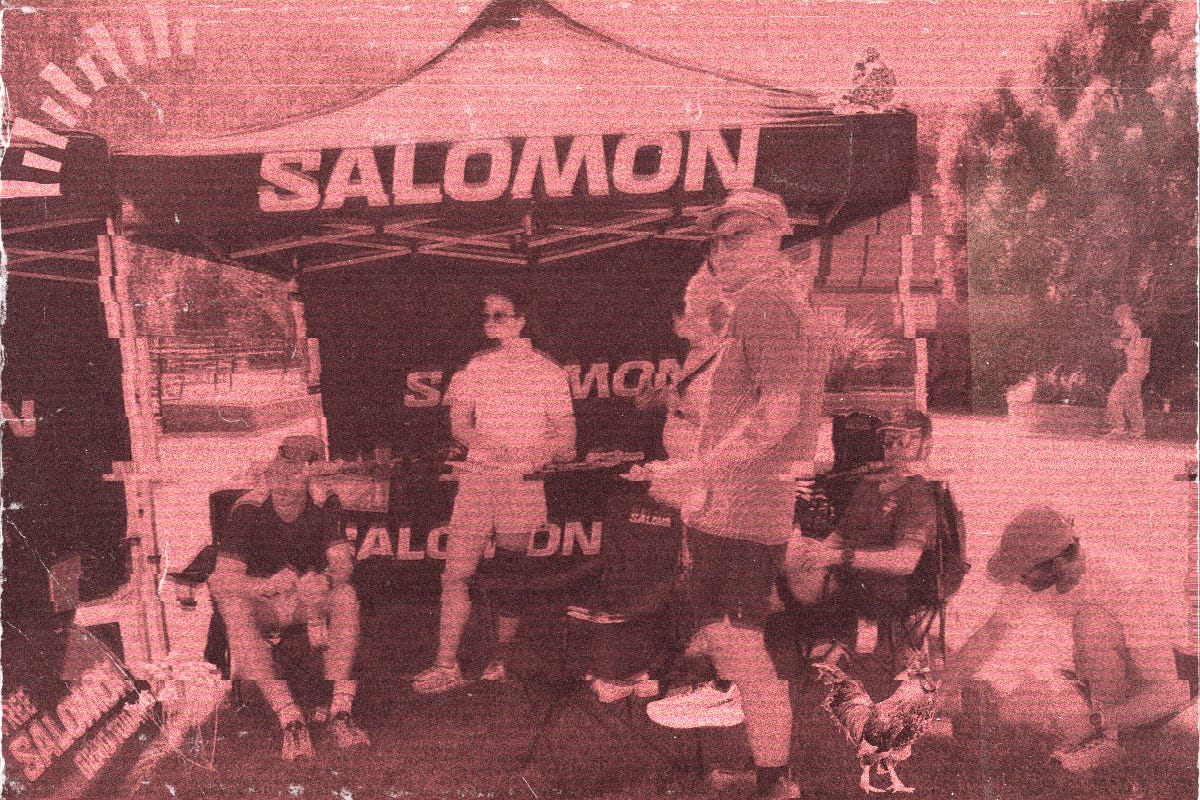
[Disclosure: Salomon provided lodging, meals, gear, and a race entry for the Big Alta weekend as part of a media experience. I was not paid to write this article and had no obligation to provide coverage of any kind. All opinions are my own.]
My relationship with Salomon goes back to 2018. Fresh off a road running injury1 and a physical therapy protocol that cleared me to run only on trails, I did some cursory research (read: watched Run Steep Get High YouTube videos) and landed on the Salomon Sense Ride. If Jamil Coury was wearing them, they had to be good.
That spring, I set out on two trail runs in the Marin Headlands that made me fall in love with trail running. I spent most weekends that year training for The North Face 50K in those shoes2 and even took them up to the top of Half Dome3. It’s no doubt that Salomon was foundational to my first year in the sport.


Eventually, and for no particular reason, I branched out to other brands. No dramatic break, no bad review. My feet are wide, and I was putting holes in the uppers of the Sense Ride where they pressed against the shoe. But the deeper drift was subtler: as I became a more experienced trail runner, I found myself more aligned with the smooth “California carpet” trails of the Bay Area than with technical alpine terrain. I gravitated toward brands that felt like a better fit for the trails I was running and the runner I was becoming. Salomon, for all its technical excellence, was a European mountain brand. And I wasn’t running European mountain-style terrain.
Fast forward to March 2026, eight months into writing this newsletter, where I received an invite from Salomon’s PR team to attend the Big Alta as a media guest. A few weeks later, I arrived at an Airbnb in San Rafael to find a welcome pile of Salomon shoes, a hoodie, and all the nutrition I would need to race the 28K that Sunday.
The historically alpine brand I’d quietly grown away from was hosting me for a weekend of racing in the Marin Headlands, starting at sea level, on some of the smoothest trails in California. It felt like a deliberate closing of the gap. The weekend would help confirm whether or not that was true.
Origins
Founded in 1947 in Annecy, Salomon started as a ski brand before pivoting to trail in the early 2000s. Through the 2010s, the brand built the prestige tier of European mountain running behind athletes like Kilian Jornet and François D’Haene. Deeply Alpine, technical, and elite. That identity had real consequences for who felt like a Salomon runner and who didn’t.
Courtney Dauwalter’s signing in 2017 was the first crack in that mold. Coming off a breakout 2016 season but without a major win to her name yet, she joined the brand as an ambassador. She would go on to win UTMB, Hardrock, and Western States (setting an insane course record), in the process cementing herself as one of the greatest trail and ultra runners of all time.
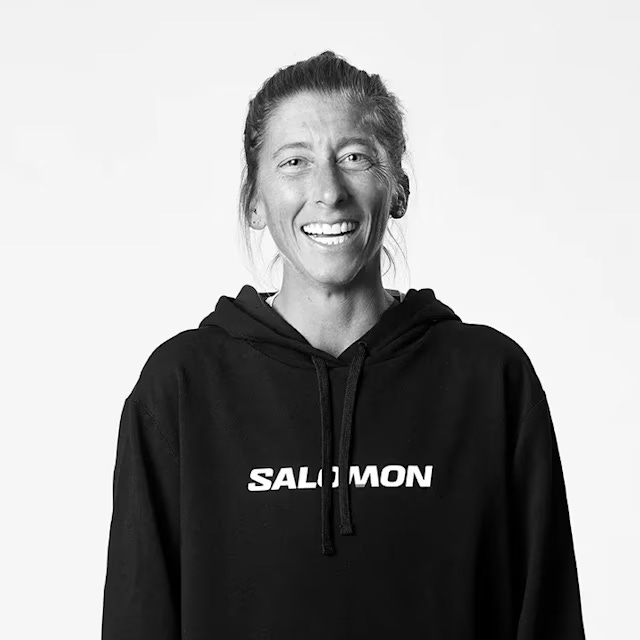
She re-signed with Salomon in 2024 and credited that initial ambassador deal as a key vote of confidence that was crucial to her success:
“In 2017 the Salomon US team took a chance on me and added me as an ambassador. They sent a box with some pairs of shoes and a few running outfits. They told me they believed in me… I was over the moon. Walking down memory lane, that same year I ran the Moab 240. Who knew it would be the start of such a special relationship. A partnership. A team.”
Salomon made a bet in 2017 that paid off for both the brand and the athlete. Whether that informed a broader strategy or was a one-off stroke of luck is hard to say. What I can say is that heading into 2026, the brand seems to be operating with a level of intentionality that suggests the former.
The Big Alta weekend gave me a front-row seat to what that strategy looks like in practice.
The Four-Part 2026 Playbook
The privilege of being on the ground for the Big Alta was experiencing the weekend from multiple angles at once: fan, volunteer, media, and runner. That combinatory context helped me appreciate how Salomon is leaning into both this race and the sport more broadly.
[The Race] Investing in Culture, Not Just Coverage
Paying to be the title sponsor of a two-year-old race in Freetrail’s backyard is a statement. In my opinion, it signals more investment than fad. But it’s one thing to write a check and pitch a tent at the start line. It’s another to invest in the culture on the ground.
Salomon showed up differently on each day of the weekend. On Thursday, it was a tent at San Francisco Running Company’s happy hour and bib pick-up. Runners could interact with brand employees, check out the new Aero Glide 4 GRVL, and grab their race bibs in one casual environment.
On Friday, Salomon established a presence at the start/finish line, hosted a shakeout run with Tommie Runz and Grayson Murphy, and provided demo shoes and swag to spectators who stopped by. Our crew also provided hype and support to Dan Green as he set off to race the 50K.
Saturday was the Big Alta 100K, where Salomon sponsored an aid station at Stinson Beach (mile 23ish). Brand employees worked alongside volunteers to support runners before the long climb up to Mt. Tam. After most of the leaders came through, Dan and Grayson joined the media crew and some Salomon employees on a shakeout run up the famous Dipsea Trail.
To cap off the weekend on Sunday, I had the opportunity to race the 28K. After a weekend of spectating, volunteering, and learning, I finally got to experience it as a runner.
Each day added another layer of context. Even the media house itself was a signal. The mix of invitees included Substack writers, podcast founders, and community builders. People whose value is cultural and intellectual, not just reach.
Salomon wasn’t there to just pitch. They were there to give people enough context to understand what the brand is actually doing.
[The Product] Matching the Terrain, Not a Legacy Image
A product that featured heavily throughout the weekend was the Aero Glide 4 GRVL, Salomon’s new door-to-trail shoe, and almost certainly not a coincidence given how well its use case matches Big Alta’s terrain. Dan Green demoed a pair to a 5th place finish in the 50K.
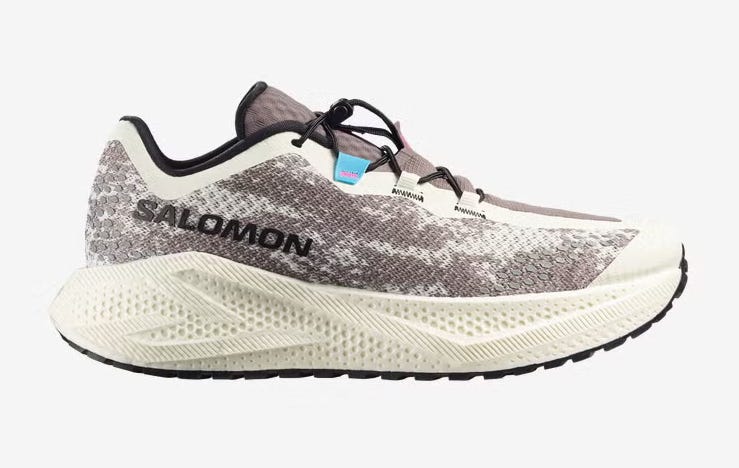
This isn’t the Salomon you’d expect. A gravel shoe built for terrain like California fire roads is a long way from the steep European mountain terrain I associated with the brand. But a conversation with Brandon Crouch, Salomon’s North American Merchandising Manager, reframed how to think about it. Rather than taking a technical mountain shoe and stripping features down to make it more accessible, Salomon started with a road shoe design and added gravel-specific features. Bottom-to-top instead of top-to-bottom. It’s a subtle shift, but a meaningful one. It signals a commitment to the actual user experience rather than the brand’s legacy image.
The product and the race partnership are the same bet on a different axis. Salomon is willing to go where the sport actually is, not just where its history says it should be.
[The Athletes] The Whole Person, Not Just a Result
Dan Green lives and trains in West Virginia, about as far from the French Alps as you can get, geographically or culturally. He’s 29, winner of the 2025 Cocodona 250, and represents a new generation of the sport in both in personality and in range4. As he crossed the 50K finish line, Dylan Bowman called him “your favorite trail runner’s favorite trail runner”. Even if you dispute the literal claim, the sentiment rings true within 10 minutes of talking to him.
What stood out at Big Alta wasn’t just his racing. After a tough 50K in brutal heat, Dan spent the rest of the weekend like he was one of the crew, cracking jokes at dinner, joining the Stinson shakeout, and cheering for 100K runners. He gave us a window into both how he thinks about racing and who he is as a person.
Grayson Murphy is a four-time USATF MUT Champion, a two-time World Mountain Running Champion, an entrepreneur, and a soon-to-be mom. Most brands might take a wait-and-see approach. Salomon signed her in her second trimester. Her presence at Big Alta and on Salomon’s athlete roster are both statements of intent. One of the most authentic athletes in the sport, only becoming more relatable as she enters a new chapter of her life.
Erin Cooper, Salomon’s North American Senior Brand Manager, explained the thinking to Jonathan Levitt in a great Long Run Labs piece titled “Brands Still Don’t Get This”:
“We know Grayson’s not going to be running for a while. But we believe in her and what she wants to do and what she means to the sport and the community. It’s the longer path…Women peak later. She’s probably just got the best days ahead of her in terms of what’s coming. And mom strength is a very true thing.”
This is an investment on both future performance and current brand value. As Jon put it:
“…pregnancy is not a sponsorship risk. It is a long-term bet on an athlete who also happens to be a full human being with a platform, a business, and a community that will watch how she is treated.”
Both signings continue the pattern established with Courtney. Long-term bets on athletes as whole people, with platforms and arcs that outshine any result.
[The Ambassadors] Intellectual and Cultural Credibility
Lee Glandorf of The Sweat Lookbook recently wrote that Salomon “has taken an intellectual turn in signing their latest ambassadors,” citing Raziq Rauf’s book tour to promote This is Running alongside the GRVL shoe, as well as Lydia Keating’s Good Story community at the intersection of running and storytelling.
These choices reflect the same philosophy as the Big Alta media house. Salomon is aligning with passionate, credible voices in the community and welcoming them inside the tent. The result isn’t just media coverage, it’s added context.
The through line across all four moves is that Salomon is building toward a version of trail running it believes already exists and choosing every partner accordingly. In 2026, that’s not a monoculture of mountain athletes. It’s also the California carpet runner. The kid in West Virginia who loves trails. The trail runner who also runs road marathons. The superhero mom who also happens to be a badass athlete.
The Big Alta Weekend: On the Ground
Two scenes from the weekend crystallized how Salomon actually showed up for this race.
Scene 1: Stinson Beach, Saturday
The full Salomon media group, plus Grayson and Dan, running the Dipsea Trail, eventually being deposited onto the beach via a rock scramble, then searching for the least sketchy way back to town. This wasn’t a planned activation. It was a casual shakeout (the same Stinson shakeout I mentioned earlier) that turned into an adventure because the right mix of people were in the right place.
Natural, authentic, spur-of-the-moment. That’s what investing in a race weekend looks like when it’s done right. Not just a tent or a banner, but a shared experience on the trail for athletes, media, and brand employees finding the same joy in the same place. Salomon created an environment where that could happen. The trail did the rest.
Scene 2: The Big Alta 28K, Sunday Morning
By Sunday I was ready to run. At the start line, all of the Salomon folks who weren’t racing, including Grayson and Dan, were there to see us off, which helped calm the nerves as the gun went off.
I opted for the all black kit: the Shakeout Core Graphic long-sleeve and the Sense Aero Shorts were breathable and moved well in the heat. The S/Lab Ultra Glide 2s were comfortable and stable with zero foot issues. I wore the GRVL Skin 4 vest for hydration, which was lightweight and held what I needed, though it bounced more than I’d have liked on the descents. In hindsight, a waist band probably would have sufficed, but with only one aid station mid-race I played it safe.
The race delivered. Two long climbs, two quad-smashing descents, 17.4 miles and over 4,000 feet of gain and loss. As I crested Big Rock Ridge and took in the 360° views of the Bay Area, I paused to appreciate that moment and the journey. Nine months earlier, this newsletter didn’t exist. Now I was running in one of the most beautiful places in the world, invited by one of the biggest brands in the sport. Life is funny like that.
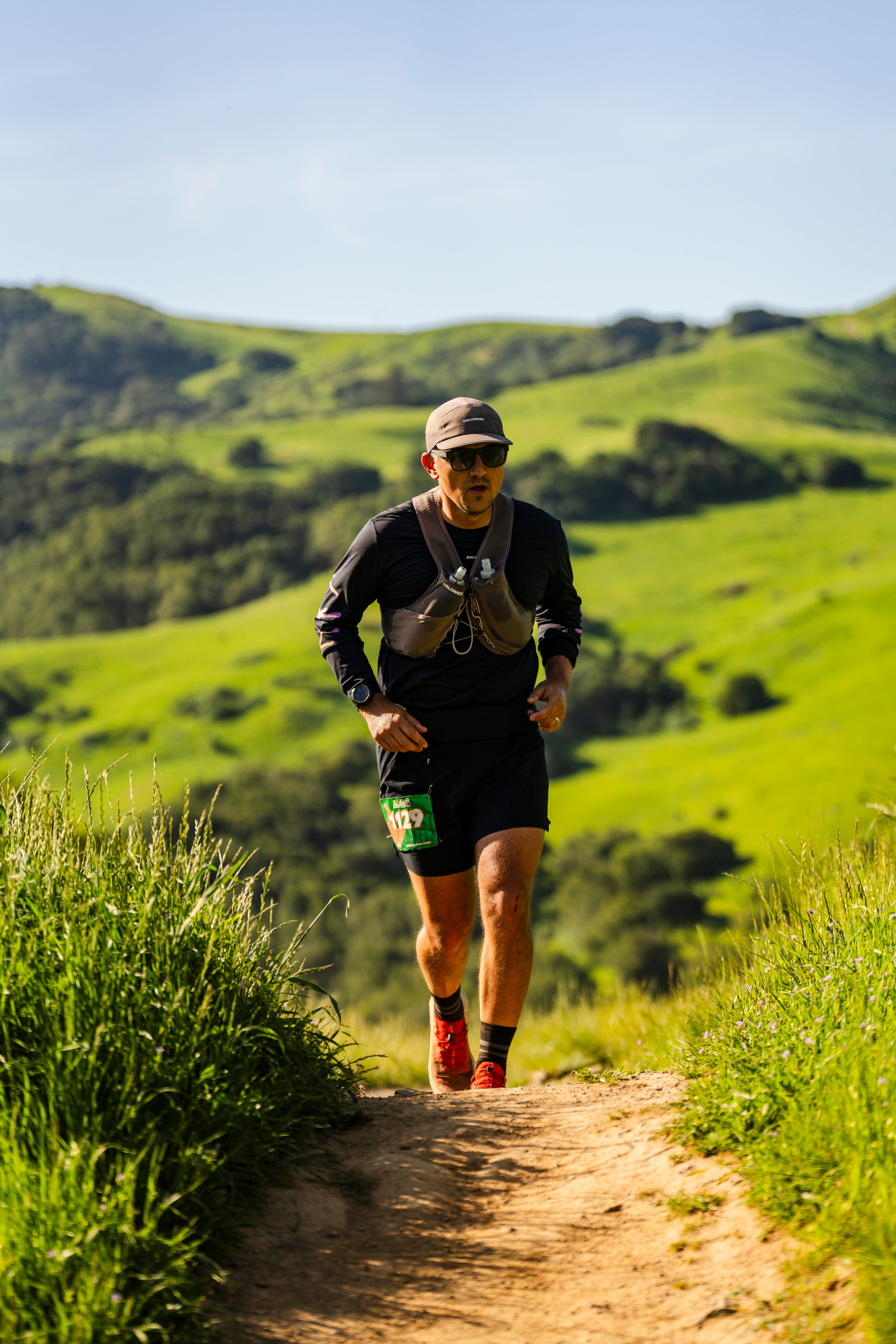
It wasn’t all smooth sailing. As I hit the road toward the finish, my right hamstring seized and brought me to a walk. For a moment I thought I’d be hobbling the last quarter mile in. Fortunately a hobble became a slow jog, which became something resembling a real run by the time the Marinwood community center came into view.
A Few Observations
On Salomon’s presence: the gear, the product conversations, and the presence of Dan and Grayson fit together across the weekend in a way that felt cohesive and authentic. It didn’t feel like an Alpine brand forcing itself onto the California carpet. It felt like one of the sport’s cornerstone brands showing up in a way that actually met the environment.
On the race weekend itself: Freetrail and Daybreak Racing have built something truly special. A community-focused race that somehow also feels like a major event. The 100K is an instant classic that will almost certainly be a WSER qualifier next year and, if I had to bet, a Golden Ticket race someday. The shorter distances offer fast, competitive racing on the same trails. With continued backing from a brand like Salomon, the sky is the limit.
Back to the Beginning
Years ago, I drifted away from Salomon as the brand didn’t feel like it was made for the kind of trail runner I was becoming. What I saw in Marin suggests something has genuinely changed. Not just in how Salomon shows up at a race, but in how it thinks about the sport and where it’s going as it continues to grow.
The moves surrounding the Big Alta aren’t isolated decisions. They’re a coherent posture. Salomon is willing to meet trail running where it’s at, whether that’s in the Alps, on California carpet, in the hills of West Virginia, or in the third trimester of pregnancy. The sport exists in all of those places at once, and the brand seems to know it.
Lee Glandorf called Salomon “long the preferred shoe of creative directors.” Jonathan Levitt called the Grayson signing “a performance-based business argument.” A brand that earns both descriptions in the same week is doing something right, or at the very least, doing something different.
It feels fitting that the brand behind my first trail shoes was also the first major brand to welcome me as a legitimate member into the trail running community. I’m excited to see what comes next.
Questions? Comments? Drop them below!
The Aid Station
Miscellaneous quick hits. Trail style. Actionable, digestible, essential.
🐆 Zach Hauer’s Big Alta 100K Recap
Zach Hauer is a co-founder of nutrition brand Open Fuel and author of the Substack Late Entry. He also placed 4th at the Big Alta 100K, coming in 63 seconds after 3rd place. I thoroughly enjoyed his play-by-play of how the race unfolded and the range of emotions he felt reflecting on his finish.
Next up for Zach? Cocodona in May!

🎙️ Jonathan Levitt (Long Run Labs) on Second Nature
I was fortunate to finally meet Jonathan at the Big Alta and was excited to immediately see him in my feed on Second Nature. In a fascinating conversation about “the evolution of brands, athletes, and creators,” he shares valuable and actionable advice on marketing funnel best practices, earning trust as a creator, AI, and more. Highly recommend, especially for creators in the outdoor space.
🔥 Brands That Stood Out at the Big Alta
Salomon wasn’t the only brand with a strong presence. A few others worth highlighting:
Terignota — Relatively new to me, though founder Alex King ran and finished 7th in the 100K5. I spotted a lot of runners in Terignota gear throughout the weekend, especially the Sendero Shorts and the Valhalla Vest. No affiliation, but have a strong following and I appreciate how transparent Alex is on social media about the business.
East Peak — Named after the East Peak of Mt. Tam, the highest point in Marin County and a summit on the 100K course where the brand ran an aid station, it was no surprise to see their product everywhere. The Poppy Socks and zippered Ice Bandana seemed to be the most popular.
NeverSecond — The official nutrition sponsor of the Big Alta. I was personally excited to try the brand’s drink mix and sodium booster.
I set an arbitrary goal of running 1,000 miles in a year after never running anywhere close to that previously. This was during my stint at Strava where motivation and camaraderie were high.
The 2018 edition would eventually be cancelled due to wild fires.
This is a topic for an entirely different newsletter, but I had no idea what I was getting myself into until I got to the cables and had to go up and down without anything to clip me in. Never again.
He ran Cocodona, WSER, CCC, and JFK 50 Mile last year. This year, he’s already raced two 50Ks and is scheduled for the MAMMOTH, another 200-mile race in October.
Shoutout to his mom for waiting patiently for him to arrive at the Big Rock aid station (mile 53.8), cheering loudly, and then gushing about how proud she is of him. Definitely a highlight of my volunteering experience.
“Gravel” is a fun buzzy marketing term but that’s about the only value in it. 95% of the trails in Marin are fine with a regular road running shoe 95% of the time.
Another great piece, Seth! I'm curious to see how "gravel" / door-to-trail shoes grow in offerings and also popularity. My bet is that the road-adapted-to-gravel approach (bottom-to-top as you put it) might feel more accessible to road runners curious about getting into trail running. Fire roads and NorCal trails are such a great place to start with trail running and a "lighter touch" trail shoe might give more people confidence dipping their toes into the sport.